
Technology
Modular Anchor Stations
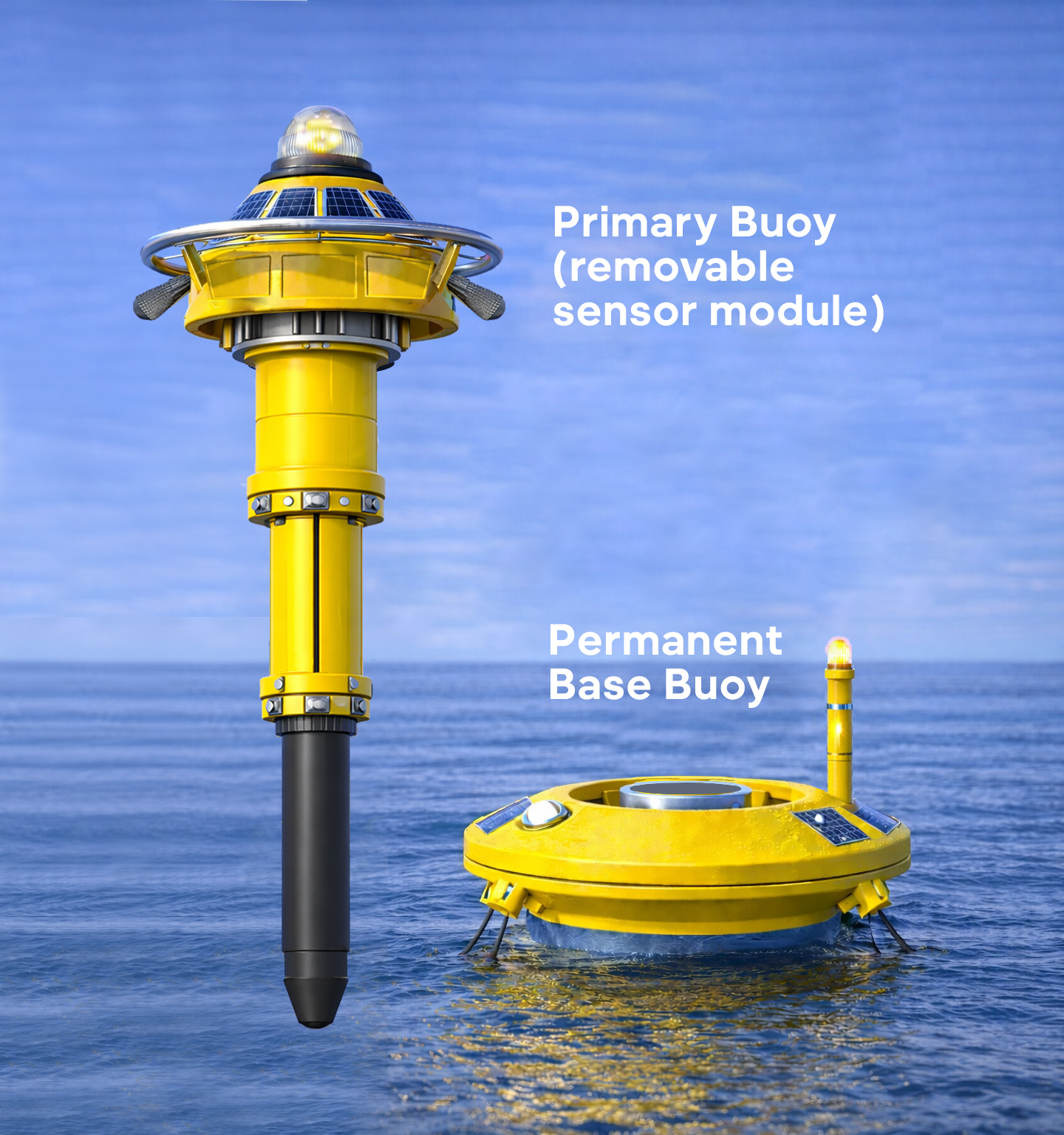
ShoreVize consists of a permanently moored base buoy and a removable sensor buoy. The base buoy remains anchored to the seabed via subsurface bridle mooring and features a fixed visibility mast with an always-on navigation light—ensuring the structure remains a compliant marker whether the sensor is present or not.
The sensor buoy—containing sonar, solar panels, and electronics—docks into the base through a quick-connect interface secured by manually actuated paddle latches. When servicing is needed, operators approach by small boat, release the latches, and lift the sensor buoy using an integrated service ring. A replacement sensor buoy is then docked in its place. The entire process takes minutes and requires no divers or anchor retrieval.
Each base buoy defines a fixed monitoring location, with sensor buoys operating as independent nodes within a coordinated mesh network. Detections at outer stations relay alerts instantly inshore to lifeguards and swimmers.
Distributed Detection System
ShoreVize buoys are deployed as a coordinated mesh network, with individual nodes spaced at intervals offshore to create overlapping detection zones across the protected swim area.
When an outer buoy detects large marine life at distance, it instantly relays the alert to inner buoys closer to shore. This cascading notification gives swimmers and lifeguards early warning—often minutes before a threat approaches the swim zone—allowing ample time to exit the water calmly.
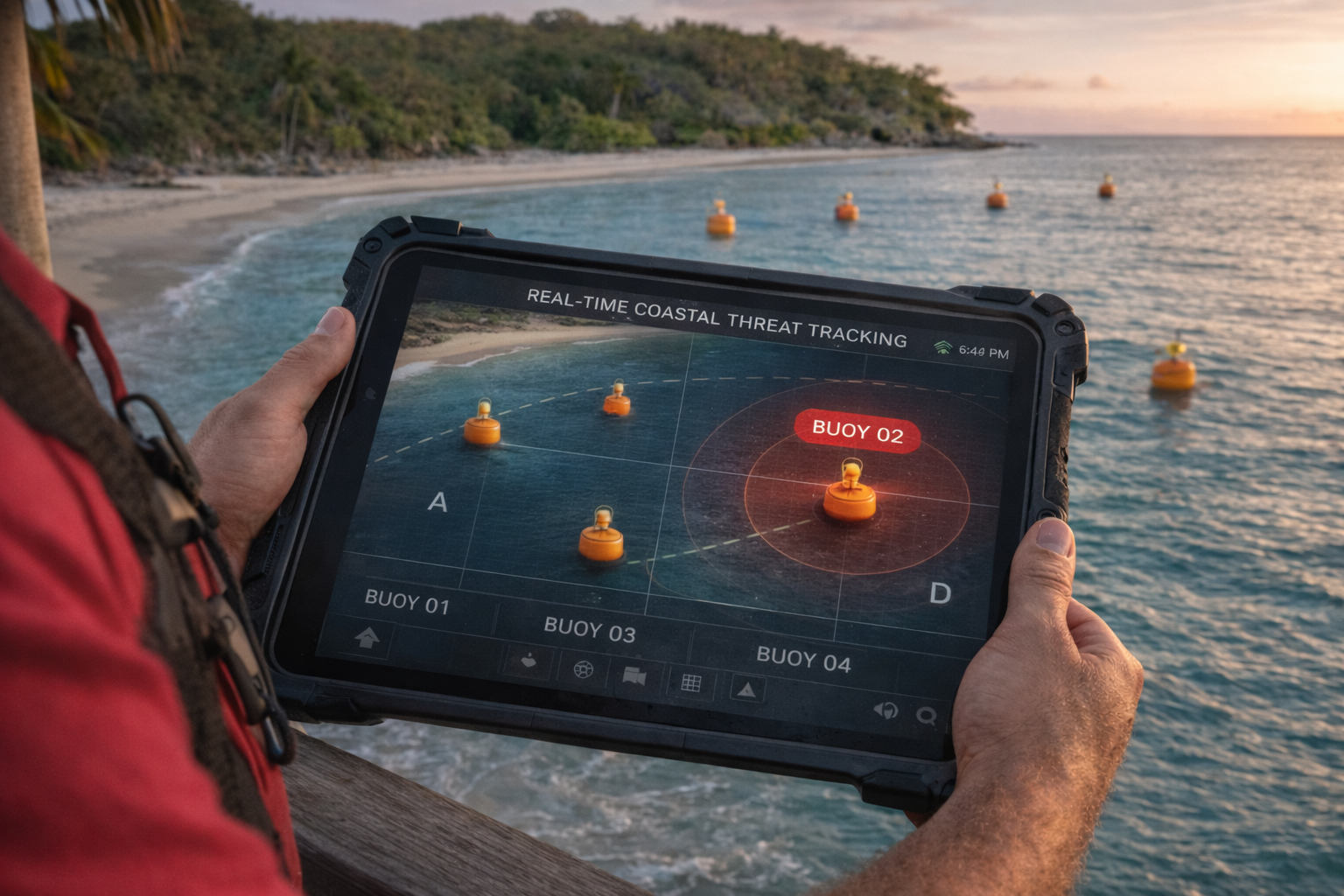
Each alert is location-specific. The lifeguard mobile interface displays exactly which buoy was triggered and in what order, enabling rapid response: if a boat launch is needed, responders know where to go. If swimmers near a particular buoy need priority evacuation, lifeguards can direct their attention accordingly.
The result is simple: early warning, clear situational awareness, and actionable information when it matters most.
Coastal Alert & Comms. Network
When a detection occurs, the triggering buoy broadcasts an alert across the mesh network. Every connected buoy relays the message, ensuring the signal reaches shore even from the outermost nodes.
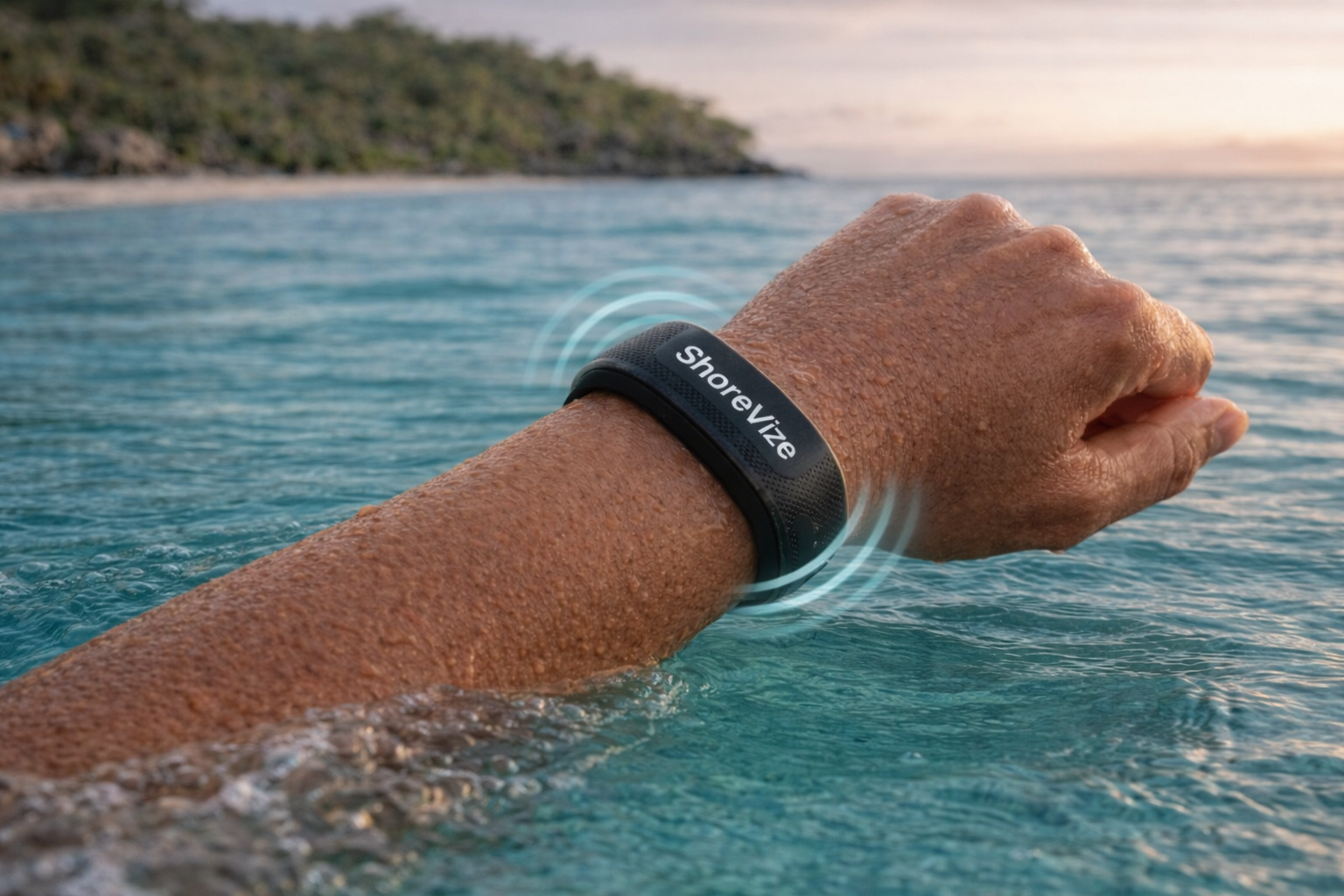
Swimmers wearing ShoreVize wristbands receive immediate, private notification through graduated haptic pulses—a single pulse for distant detection, double pulse for closer approach, and continuous vibration for immediate proximity. No cellular network required. No phone app to watch. Just a quiet buzz that tells you it's time to look up and head in.
On shore, the lifeguard iPad displays a simple map showing which buoy triggered the alert and in what sequence. If the outer buoy lit up first, followed by the mid buoy, responders know the direction of travel and can prioritize evacuation accordingly. The interface shows only what matters: green for clear, red for detected, and a clear visual of where.
The result is a communications layer that delivers early warning to the people who need it, exactly when they need it, without noise or distraction.