
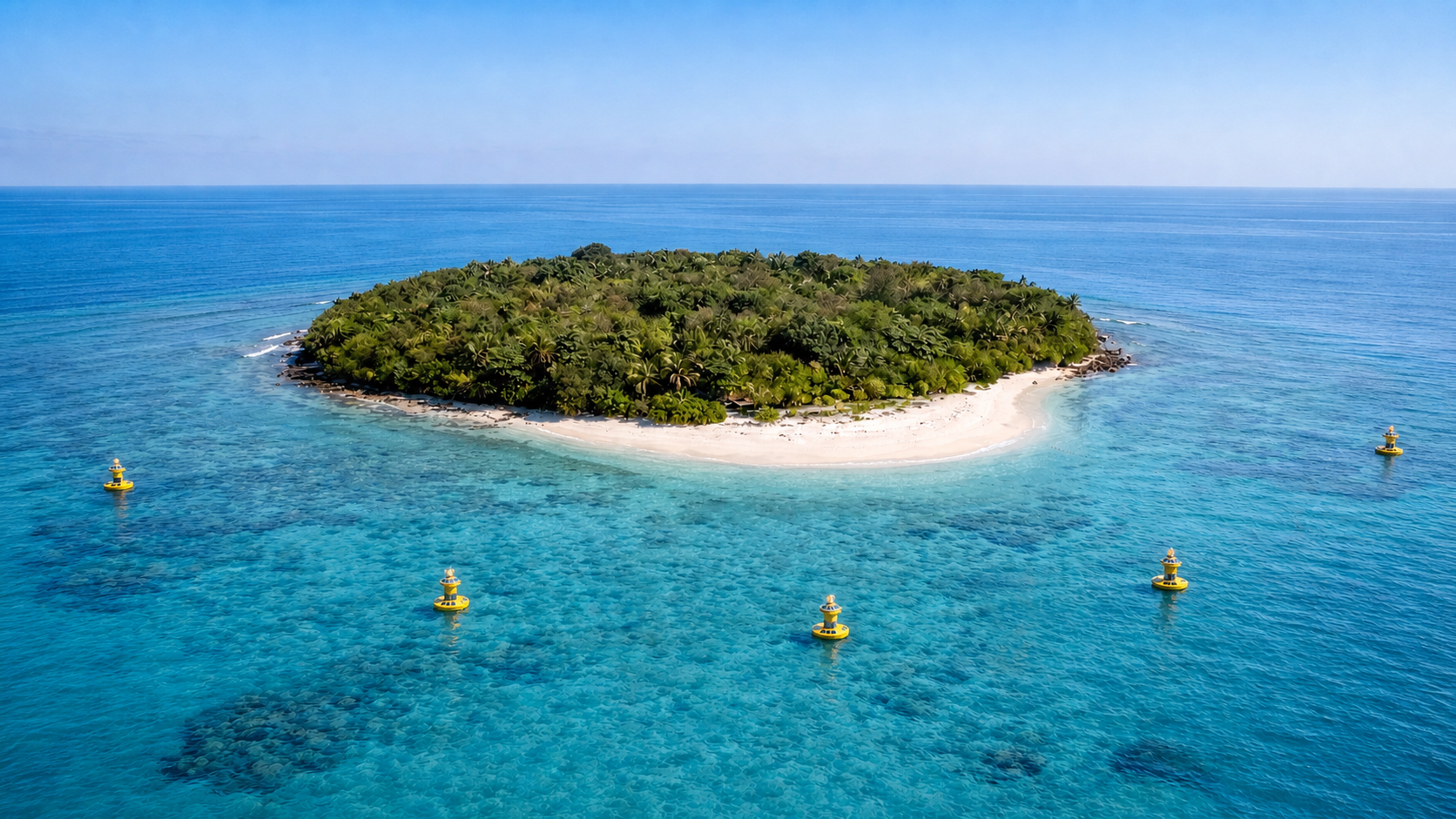
A Concept for Continuous Offshore Awareness at Public Beaches
ShoreVize is developing a solar-powered buoy network that alerts lifeguards, swimmers, and surfers to large marine presence—and can evolve into a broader beach-safety intelligence platform.
Continuous Coastal Awareness
A Rigorous Look at Next-Generation Ocean Safety
ShoreVize began as a concept for a solar-powered buoy network to warn swimmers and surfers of large marine presence. Deep technical research into sonar and acoustic detection has since redefined the project — from a product pitch into a genuine engineering case study on the real limits of ocean-safety sensing technology.
What We Explored:
ShoreVize set out to solve a real problem: give beachgoers continuous, reliable awareness of shark activity beyond what aerial patrols, tagging programs, and reactive beach closures can offer. The original concept — a distributed network of seabed-anchored buoys using sonar to detect large marine life — was developed through extensive technical research, including a modular two-part anchor station designed for fast, diver-free servicing from a small vessel.
What We Learned:
Through detailed investigation of acoustic detection physics, we identified two hard technical constraints that any sonar-based system in this space has to confront: reliable detection range caps out around 25-30 meters due to the lack of a swim-bladder signature in sharks, and the top 1.5 meters of water — exactly where swimmers interact with marine life — is effectively unreadable by sonar due to surface turbulence and wave action. Together, these constraints mean a sonar buoy network would require prohibitively dense, closely-spaced installations to deliver reliable coverage, undermining the cost-effectiveness needed for real-world deployment at public beaches.
We also evaluated camera-based optical detection as an alternative and found it faces its own hard limits in open, often turbulent ocean water — including depth visibility and the fact that a dorsal fin doesn't reliably break the surface.
Where Things Stand:
ShoreVize remains an active area of interest and ongoing research into ocean safety technology, grounded in a genuine commitment to getting the engineering right before claiming a solution works. We'd rather kill a flawed approach early than ship something that gives people false confidence in the water.
Contact:
info@shorevize.com
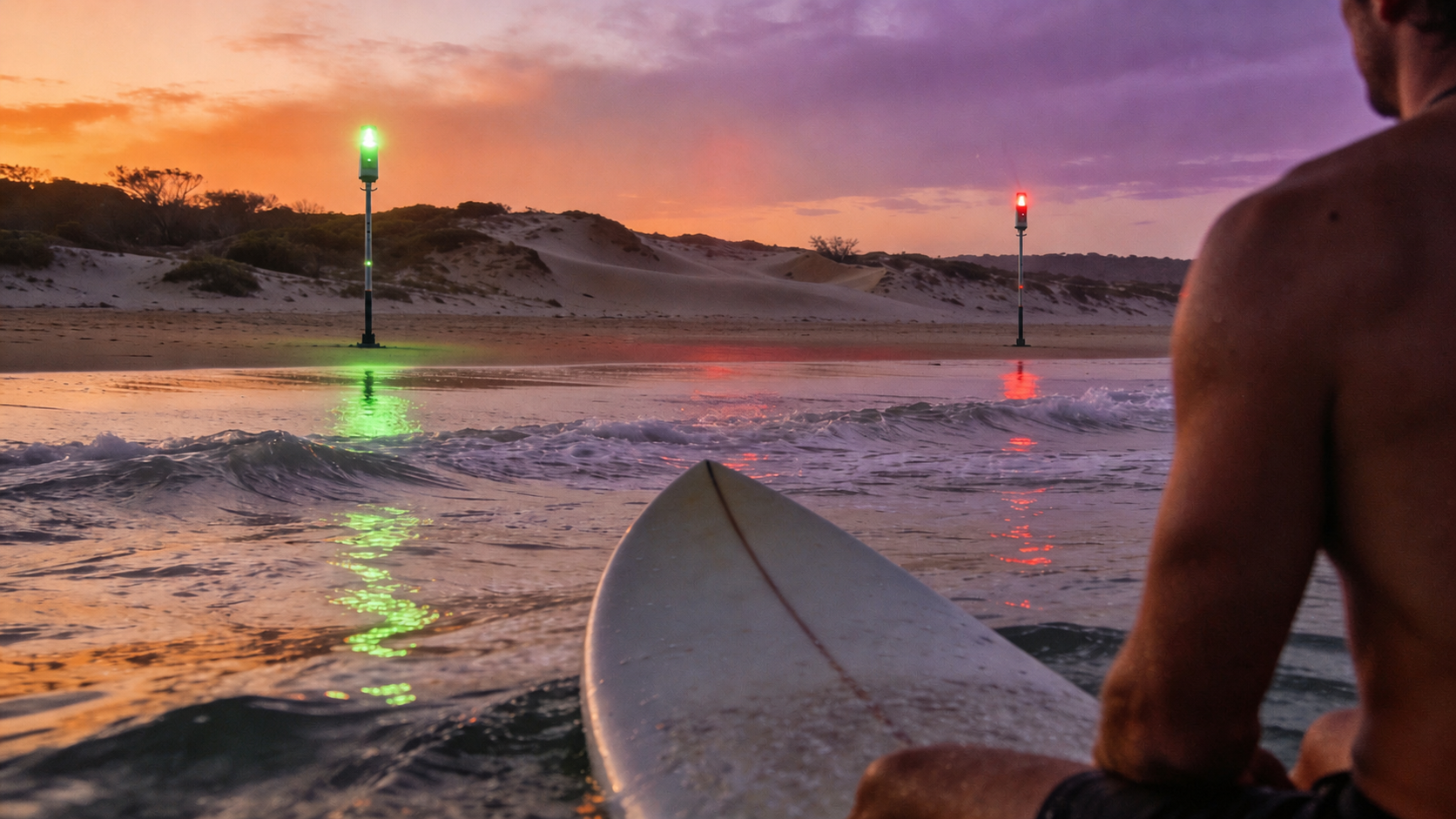
Designed Around Real-World Coastal Operations
ShoreVize is designed to extend visible protection beyond patrolled beaches. Networked buoys and on-shore alert lights are intended to give swimmers and surfers a clear warning signal, with or without lifeguards or wristbands.
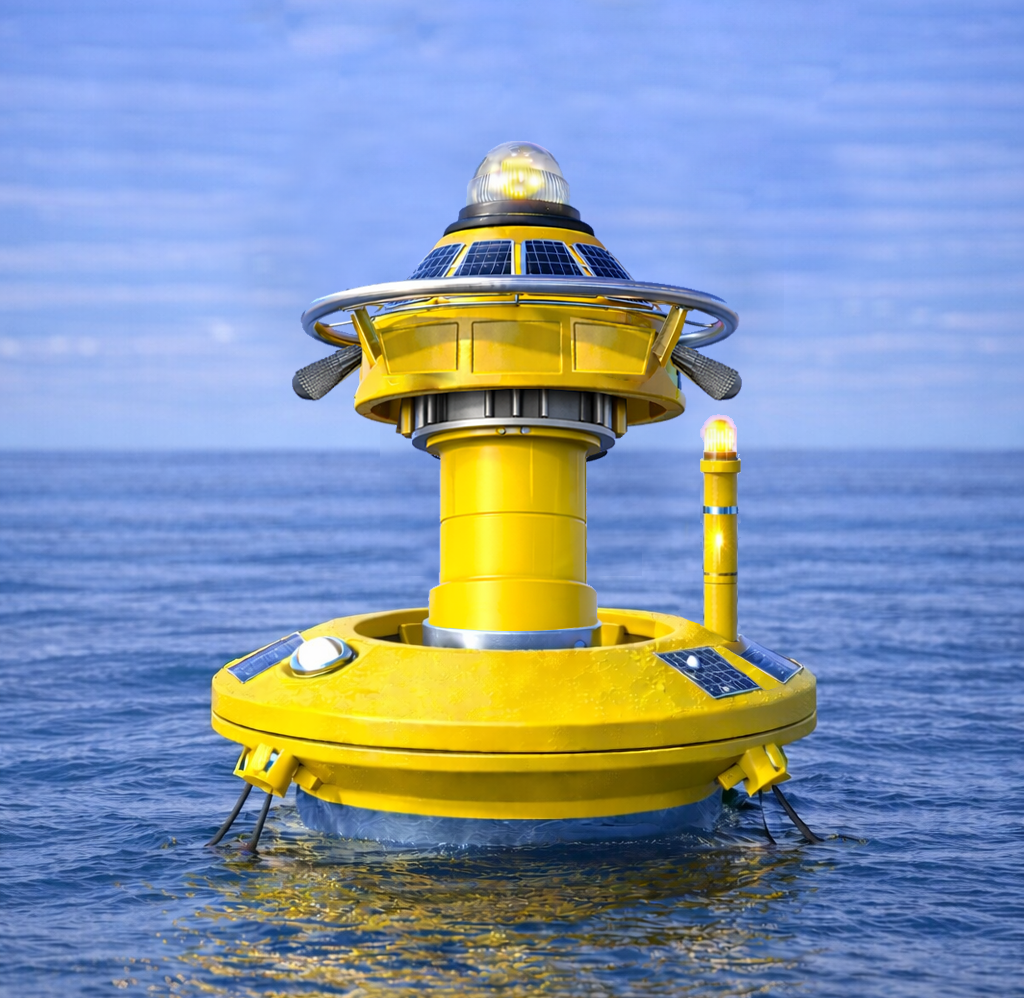
Modular Anchor Stations
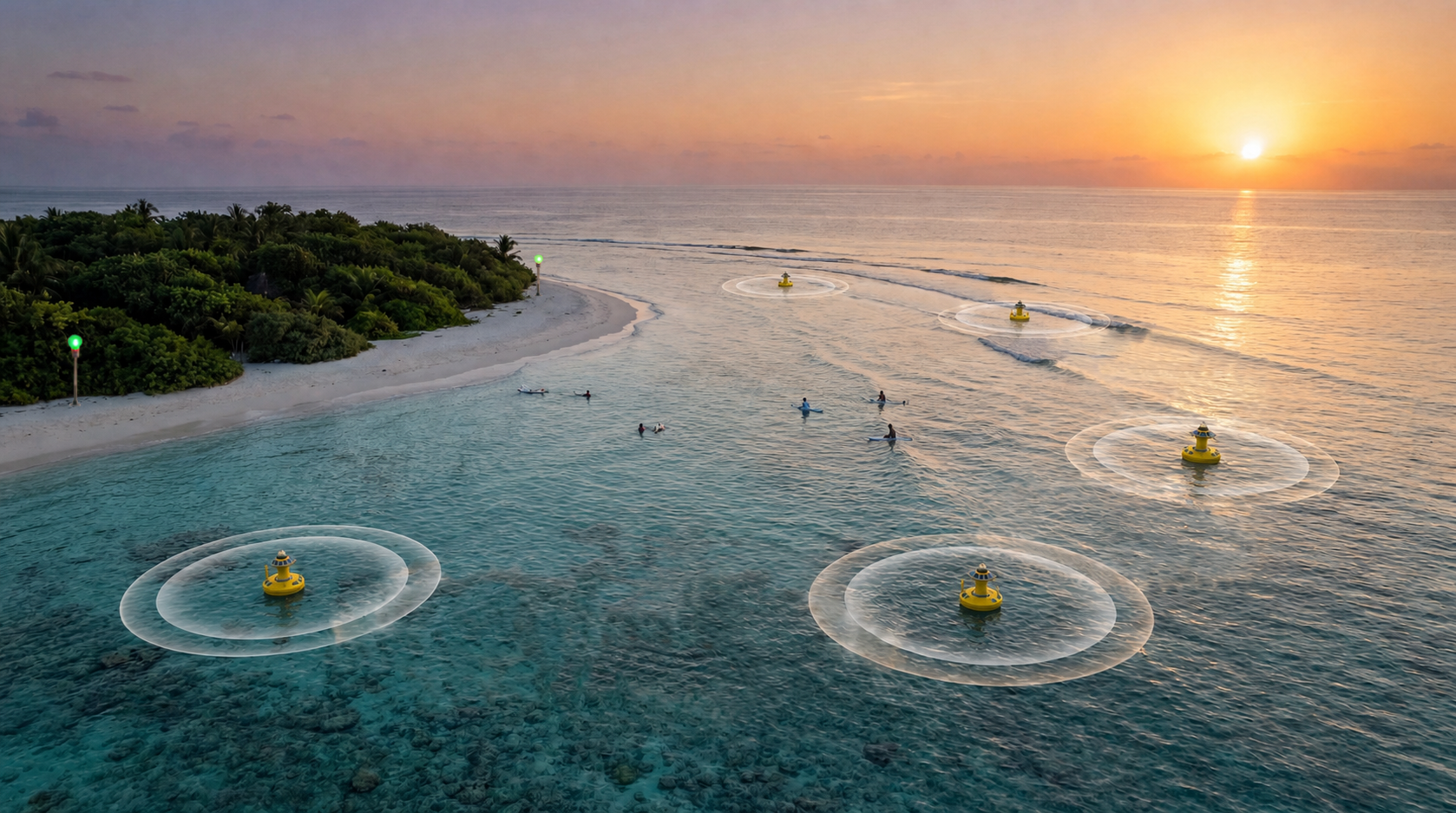
Each ShoreVize station is designed in two parts: a permanent base buoy that remains fixed in place, and a removable primary buoy that contains the sensing and power systems. This split architecture keeps the installed footprint stable while allowing the active buoy module to be exchanged quickly and cleanly when service is required.
The result is a more refined service model for coastal infrastructure—continuous positioning in the water, fast replacement from a small vessel, and minimal interruption to coverage. It is a modular station design built for reliability, low-maintenance operation, and long-term deployment in real-world marine environments.
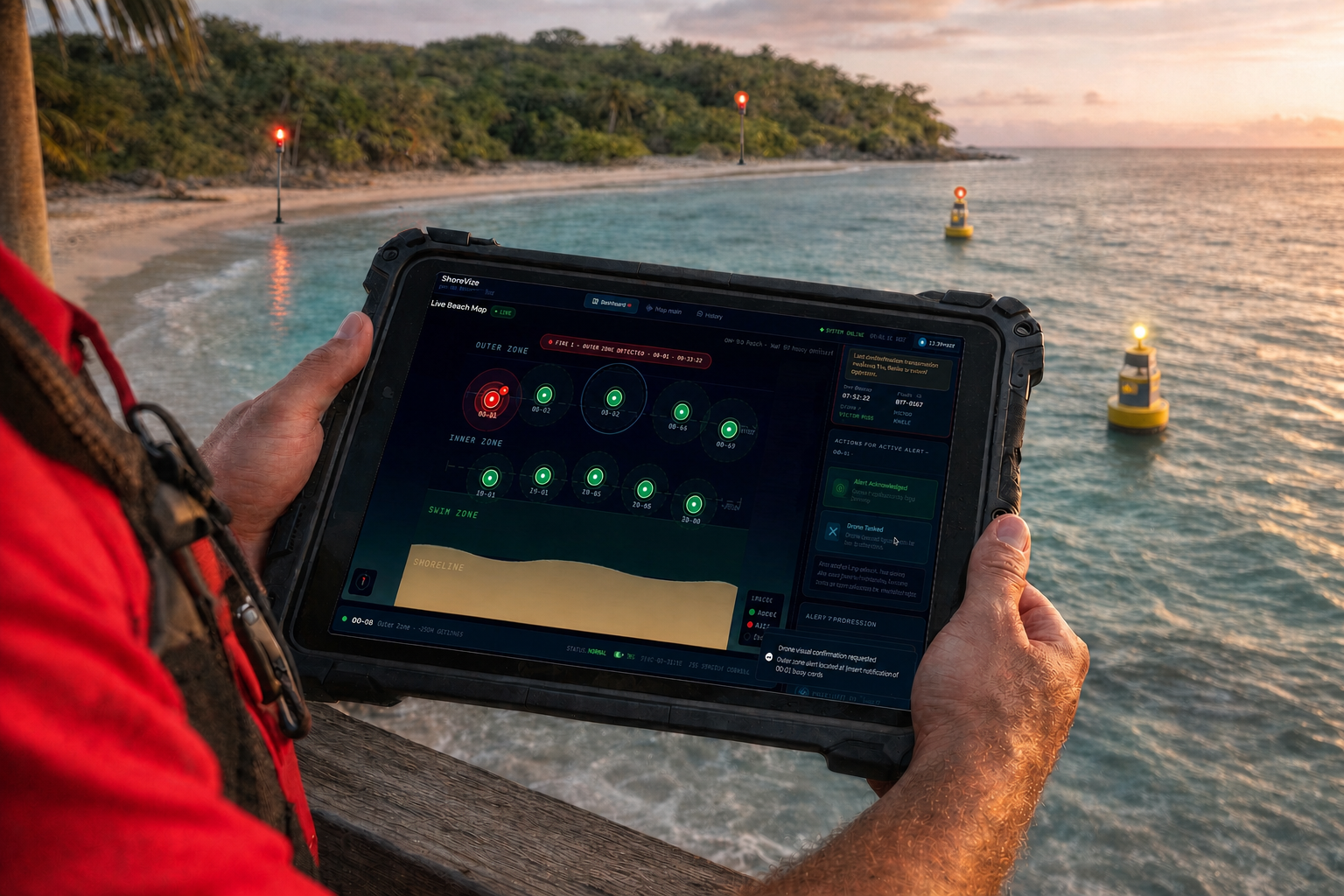
See the Dashboard in Action
Explore the key features lifeguards use to monitor the buoy network, respond to alerts, and track live beach conditions.
Real-time live beach map
Active alert visibility by zone
Incident detail and response workflow
Fleet-wide buoy health monitoring
Alert chronology and history
Synced shoreline warning awareness
Zone-Based Alert Monitoring
ShoreVize is designed to provide operators with a live status view of the entire buoy array.
Each buoy reports its operational state in real time. Green indicates normal conditions. Red indicates detected large marine presence within the defined coverage zone.
No species identification.
No predictive modeling.
Clear, immediate awareness.
When a buoy shifts to alert status, the affected zone is instantly visible across the system.
Concept interface walkthrough — not a deployed application.
From Detection to Notification
Presence Detected
Each ShoreVize node is designed to continuously monitor its coverage radius for large marine presence while also sensing local wave and current conditions associated with rip-current risk. When activity or hazardous surf-zone conditions enter the zone, the intended behavior is for the buoy to shift to alert status and relay the signal across the network.
Operator Zone Alert
The dashboard is designed to show the live status of every deployed buoy across the protected swim area. When one enters alert state, the intended design allows operators to instantly see which zone changed and whether response attention is needed for shark activity, elevated rip-current risk, or other hazardous nearshore conditions.
On-Shore Alert Lights
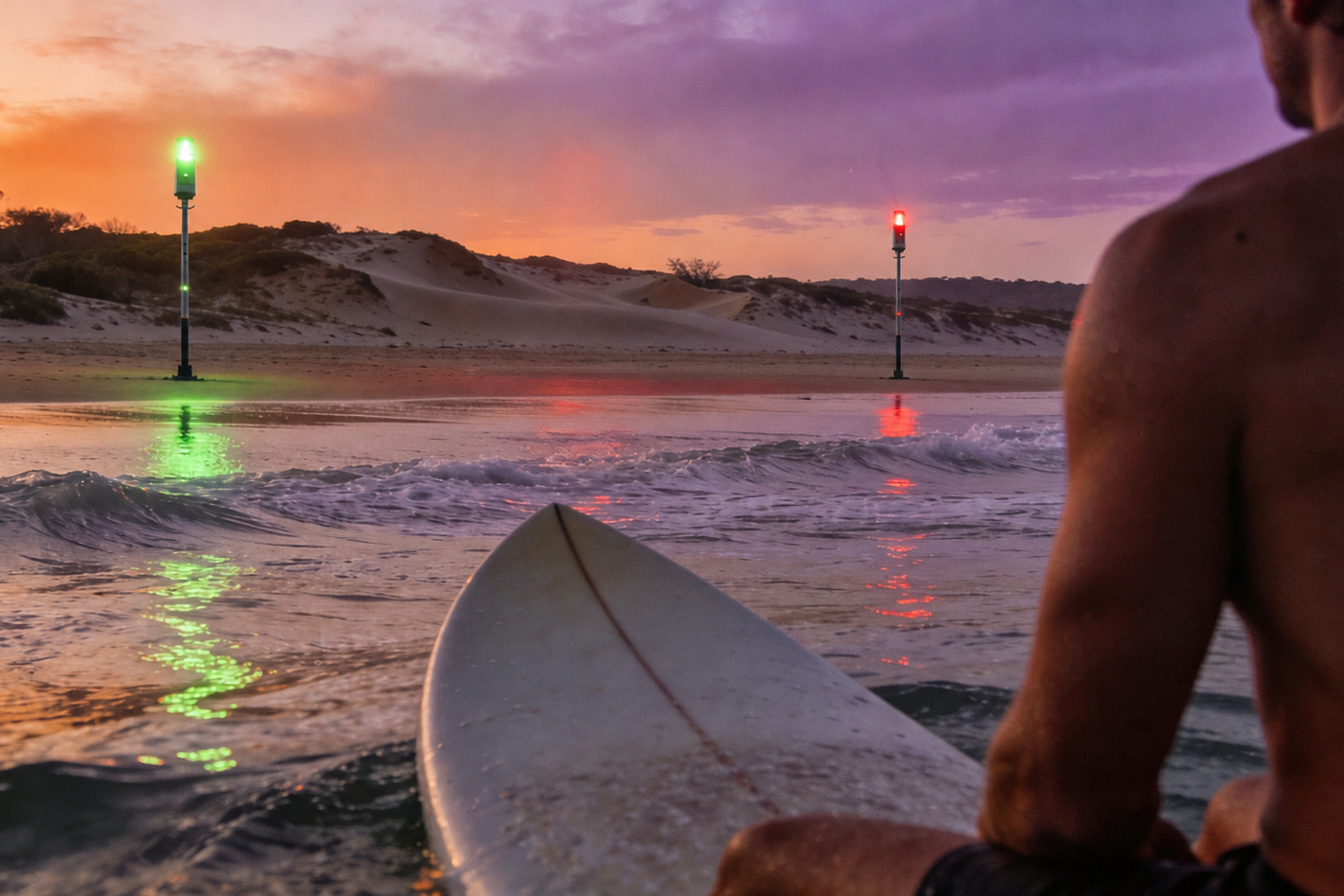
On-shore alert lights are designed to sync directly with the buoy network in real time. From the water, swimmers and surfers can see the same zone status being shown offshore — making them particularly well-suited for unpatrolled beaches and after-hours use at normally patrolled beaches and resorts.
Haptic Notification
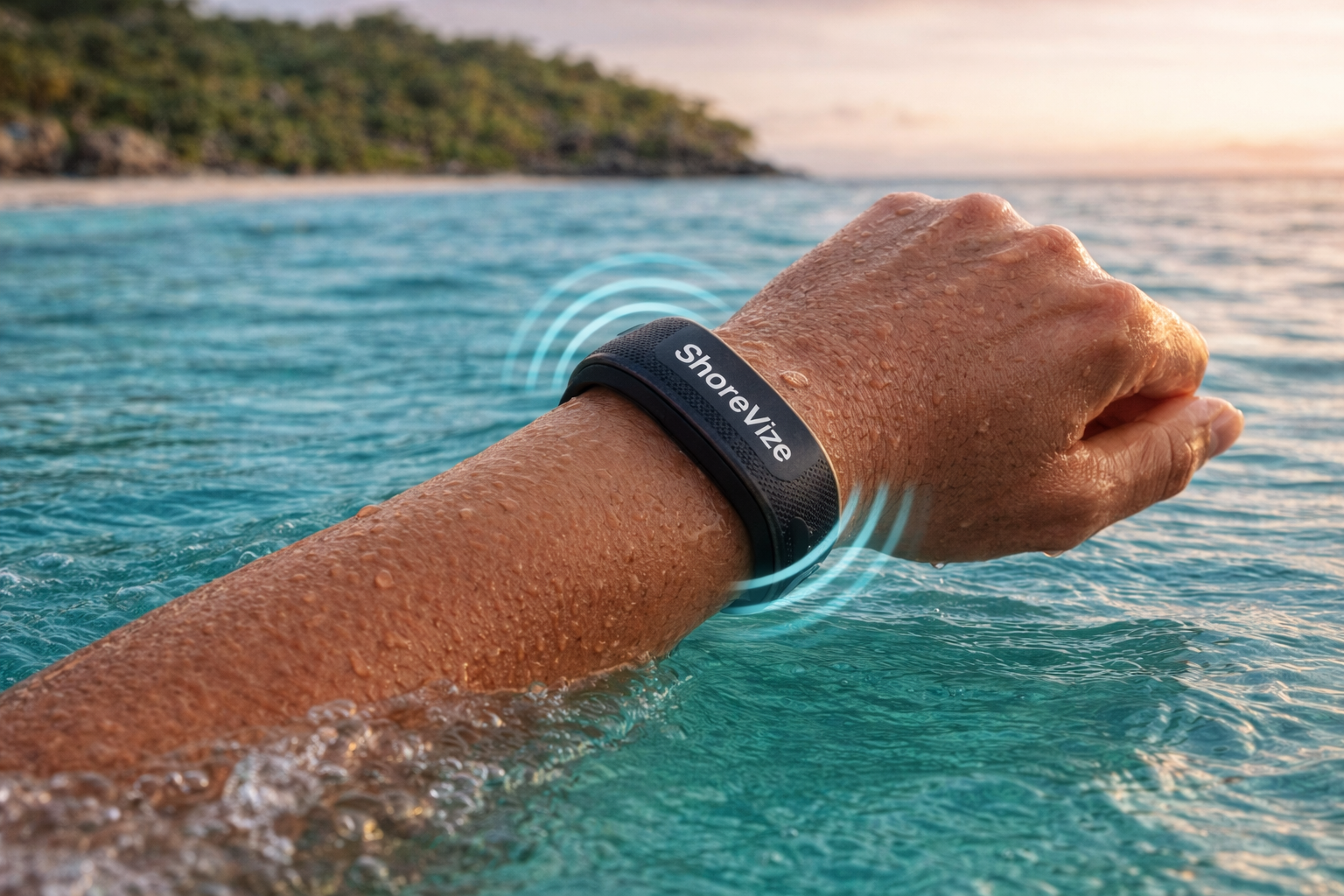
Connected wristbands receive the alert signal and initiate vibration.
The notification is private, immediate, and designed to prompt calm exit from the water without requiring a phone or screen.
Contact
Feel free to contact us with any questions.
Email
info@shorevize.com